On my little journey home from college, when the bus goes across the high-level bridge, I have recently noticed some artwork on the side of a building that now always catches my eye.
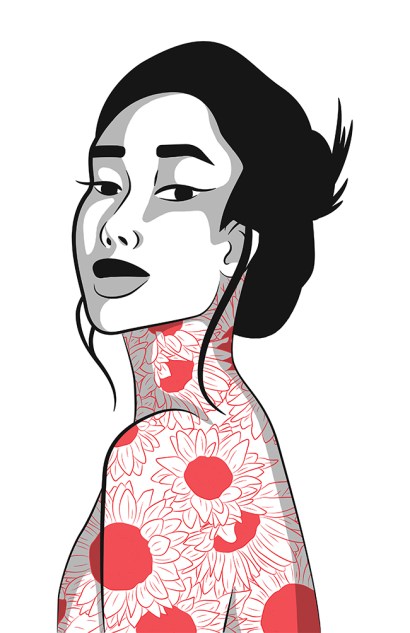
The piece is of a woman wearing a fabric formed of multiple patterns and she has a blue circle behind her head which helps attract your eyes to her face. I believe what initially attracted me to this art is that it had reminded me of my own work, a piece I had created for the window in my classes studio last year, of a woman with a floral pattern of tattoos running up her body. (This piece is also currently being used on my business cards too).
When seeing this artwork by ‘Hushartist’ on my way home, just sitting on the bus, it made me think of the potential I could have with my own work, possibly working on a larger scale and one day, another person may find it, do some research into who created it then they would find me.
I like this piece so much as yes it is a style I relate to, I love soft illustrations of women combined with bold patterns, especially in this piece how the artist has made the woman black and white with the pop of colour surrounding her, not drowning her out but helping draw your eyes to her beauty instead. But I also like this piece because I saw it on the side of a building underneath the Tyne bridge, which led me into researching it, finding out which building it was on ‘By the River Brew Co’ which is a brewery and tap, a restaurant and so on which I never even knew existed, and finding the artist and seeing their other work. So with this one piece of art, it did a good job in advertising, both the place and the artist, as it was able to grab my attention from two bridges over on a moving bus.
For a recent local exhibition ran by A Canny Collective, which I was a guest artist for, with the theme of love, I decided to focus on self-love in the form of body positivity, so in my pieces, I wanted to illustrate multiple bodies of different shapes and sizes. I am confident with the message behind these pieces as everyone should learn to love and appreciate their own body shapes and sizes, buuuut there was also another reason why I had wanted to draw bodies for this mini project, as I wanted to use it in order to get better at drawing anatomy. Luckily for me, an artist named Chelsea Gracei had posted a video on youtube discussing and showing how she specifically draws anatomy and poses.
Chelsea Gracei is an illustrator who I have followed on social media for a while now. This was the artist who I had taken inspiration from in the #DrawThisInYourStyle challenge on Instagram a month ago when I had redrawn one of her characters. Her style is more cartoony so her figures are not exactly anatomically correct, but she does have enough knowledge on anatomy that she knows how to manipulate it so that her characters are still pleasing to the eye.
In the video, she discusses how she uses oval shapes to form her characters, as it gives a more flowing sense, creating more movement within the character than using a more blocky shape would. Following the artists tutorial, as well as reference images so that I would have a better idea of anatomy, I had tried drawing the first of four figures. The reference image I had used was of my friend and was posted on her private Instagram in confidence, so it would be inappropriate to show that reference image within this post.
The figure I was drawing had bigger hips but a slim waist so I tried to convey this within the oval shapes I was using. The proportions did look a bit off, but I decided to just leave them until I cleaned up the sketch a bit. In the original reference image, both hands were positioned on the hips, but I eventually chose to move them both behind the figure as I wanted the woman’s curves to be the focal point of the piece. I did initially just have one hand on the hip, but I felt the proportions looked weird within the arm without any shading and I had not intended to add and shading as to keep my design minimal, so I ended up just positioning both arms behind the woman’s back.
Once I had an initial sketch down, I tried planning out the background elements, positioning a shape behind the specific character of which I felt would best complement their figures and positioning. I had ended up only creating four pieces as I was working with a short time frame, but in the future, I would like to draw even more body shapes and sizes of all different genders and ethnicities as I would like my work to be inclusive to all. I still had further refinements to make at this point shown in the images below, but I wanted to have minimal line work, so from the sketches, I had created a white silhouette, which had cut out the figure against its background shape, then I would later line the characters, quite boldly but only using the lines to help define the bodies. The linework would taper off and not exceed the specific shapes as I wanted to keep the characters quite clean and confined to their shapes.
I plan to carry on this explanation of my process within an upcoming post, but as well as discussing my own work, I will also be talking about the exhibition as a whole and my experiences with that.
Moving back to the topic of this post, anatomy and learning from a video by Chelsea Gracei, I do feel that I had learnt from her personal process, creating more organic and flowing body proportions and positions, but I do believe I will still need reference imagery if I am to create more figures in the future, as I feel without, my proportions would end up being very off. I do plan to work on my anatomy skills and knowledge more in the future, but I feel, for the time being, I can work well with Gracei’s process whilst using reference imagery. I do believe that in future projects I will refer back to this artists tips and techniques as I did find them useful whilst working on these figures.
As a class, we have been asked to find and research some historical artists who we could potentially take inspiration from in our own work, and will also allow us to expand our knowledge of the industry from a historical view, looking at the trends which may have been present then and how they may have changed over time, and looking at the techniques/mediums/themes which were used and how I could learn from these artists and apply that knowledge to my own designs.
Over the years, throughout my coursework, I have continuously mentioned artists such as Aubrey Beardsley and Authur Rackham, as I love their work and I feel they have had a big influence on my own over the years. However, for this task, I did want to branch out and find new historical artists who I could learn more from, and who could potentially influence my work more.
Howard Pyle
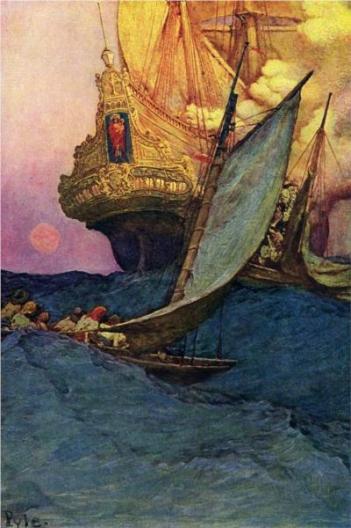
Fig.1. Howard Pyle, An Attack on a Galleon (1905)
He was an American illustrator who worked within the late 1800s to early 1900s. He had written his own children’s books which he illustrated himself as well as many other books and later started painting murals. It is said that the idea of how pirates dress nowadays initially originated from his work, as he wanted to create more flamboyant characters which were inspired by gypsies. I believe his depiction is a more romanticised version of a pirate as it is said if their clothing were as Pyle had illustrated, it would have been impractical.
Style
Within these two pieces specifically, I loved colour palettes and the softness to the pieces and when I think of romanticism this is what my mind goes to.
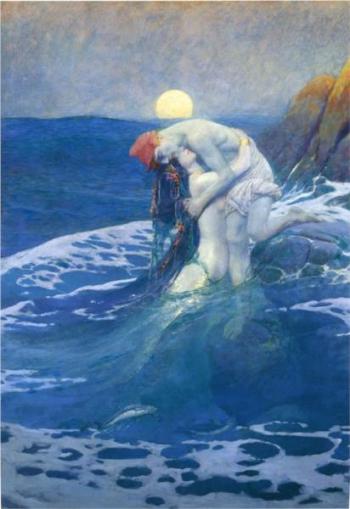
I believe there is a lot of emotion present within the artists work, for instance, in figure 1 the movement within the waves suggests the piece is a more action based narrative, whereas in figure 2, the sea is calm, it’s gentle, fitting the themes within the piece. I feel with the colour palettes used that it keeps a lightness to his paintings, but still communicates the story well.
Fig.2. Howard Pyle, The Mermaid (1910)
Technique
Howard Pyle was primarily a painter, and I believe both of these pieces are oil paintings. I have never worked with the medium myself so I wouldn’t know how easy or hard it would be to make the soft blends in which he creates within his work. I, however, can’t deny that there is a lot of skill within his paintings, being able to use a lot of colour, creating movement, motion, showing realism and being able to create it so delicately while still conveying the emotions within the piece. His work is just so undeniably beautiful, and although he has more work that shows a lot more action, these two are my favourite of his work and were the attraction pieces that made me want to research him more and include him within this blog post.
My opinion
As I am soon to be working on quite a colourful project, The Wizard of Oz, I do want to take some inspiration from Pyle as I love the brightness of the colours and softness within the piece. It gives a dreamlike quality to his work, and that may be something I wish to translate within my own work when working on that project.
I have mentioned in previous projects that I would like to try using more traditional mediums, such as gouache or maybe even oil paints like Pyle someday, but as I do mostly work digital and have recently been working more blended tones as opposed to working in a cel-shaded style, I would like to start playing around with more brushes or settings, for instance with the opacity and flow, to see if I could potentially create a painting like these examples, using digital techniques.
My main take away from this artist is how he shows realism within his work, creating softness and dreamlike qualities with his colour palettes and painting methods. I am going to try take that information and apply it to my own work in the future.
Maxfield Parrish
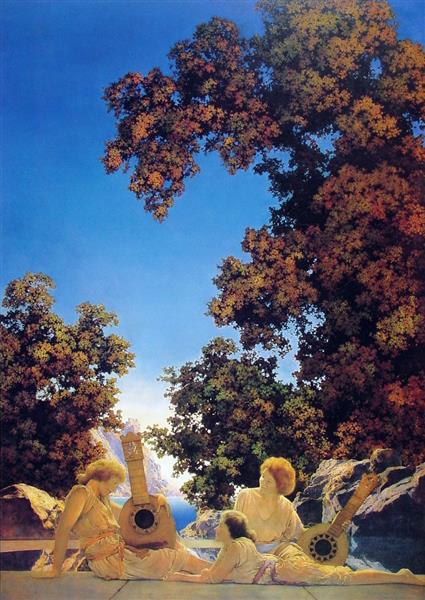
Fig.3. Maxfield Parrish, Interlude (1922)
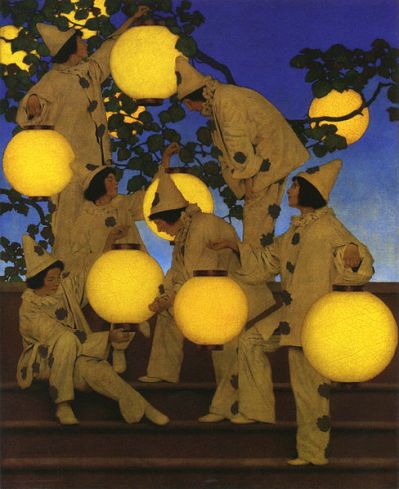
Following the work of Pyle, I also chose this artist because of his colour palette, but I also love that he worked with more mythological themes. Parrish was an American illustrator who worked in the early 1900s. He was one of the most popular artists of the Golden Age of Illustration, as well as Arthur Rackham and Howard Pyle, but was also apart of three other art movements, regionalism, symbolism and romanticism. These 3 movements I feel are very present within his work, in some pieces his composition reminds me of collage as he will have a beautiful scenic background, then position elements on top of it like characters or items, which can somewhat seem out of place but they do work. Like in figure 3 I feel the women look separate from the design but it’s not necessarily a bad thing, as the piece overall is so beautiful and the separation of the characters helps my eyes focus on them. I believe he did this with his colour palette as the warmer tones contrast against the cooler tones, but in between the two are the trees which have multiple tones of black, greens, reds and yellows so it complements both groups and makes the piece so attractive to the eye.
Style
I would say his style is definitely in the realm of realism, but there is a sense of magic to his work as there are dreamlike qualities to his pieces. In comparison to Howard Pyle, when I use the term ‘dream-like’, for Pyle I mean soft and airy, almost like a cloud, whereas with Parrish’s work, I feel it is less soft but has the whimsical nature of a dream.
What highlights these themes well was the artist’s knowledge of colour theory, as he would often use complementary colours, as seen in figure 4 which I believe adds more vibrancy and an overall sense of light and fun to his work. The bright colours within his work really help in attracting the audience’s eyes, but the artist knew when to stop, what other colours would need to be added as to not overpower the illustration. Referring back to figure 4 he has used a bright yellow against a deep blue which does help draw in the attention, but in between those colours he used quite neutral tones which helped in breaking up the tones, almost giving your eyes some breathing space.
Fig.4. Maxfield Parrish, The Lanter Bearers (1908)
Technique
I believe like Pyle, he used oil paints on canvas too, but whereas I feel Pyles work is soft and quite blended, I feel Parrish worked more realistically, as the people within the paintings could pass as photos, at least within figure 4, in figure 3 the women are quite godly, almost reminding me of Greek mythology, especially the way the characters are dress and how the sun is glowing down on them.
As I had mentioned before, I have not used this medium before so I do believe I would understand it until I did have more experience with it, or possibly watch a video/tutorial, as I know paints are different, for instance, I believe gouache dries lighter than it is laid down so it is a more buildable paint, but I think oil paints take longer to dry so you would have to work wet? I could be very wrong so I would definitely watch a video or do more research into it before trying myself especially as it is a pricey medium and I wouldn’t want it to go to waste. And that goes for both oil paints and gouache!
I would like to try creating digital paintings like this at some point, possibly within the new semester, but one day I would like to try out painting traditionally, and I would aspire to be at the level of Maxfield Parrish or Howard Pyle someday.
My opinion
Like with Pyle, as this Parrish uses beautiful and vibrant colour palettes, I would like to take inspiration from him for my Wizard of Oz project as I do want it to be a very colourful project. So this will mean thinking along the lines of Parrish, what colours may complement each other and attract the audiences attention and will I need to add more neutral tones to give the piece more breathing space.
I do enjoy working more realistically, but after discovering the work of Maxfield Parrish I will now try to find ways to make my work more vibrant and fun as I do really love the whimsical themes with his work.
Gustave Doré
This is a French illustrator who had worked within the mid-1800s and created finely detailed wood-engraved illustrations for books such as Inferno of Dante (1861), the large folio Bible (1866) and so on.
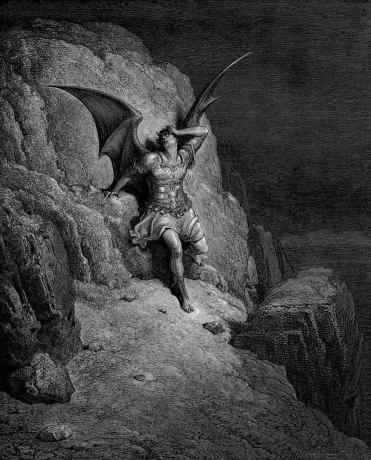
Fig.5. Gustave Doré, Paradise Lost (1866)
Style
Due to the methods he used, his work was primarily monotone, commonly printed with black ink and one of the first things I had noticed, was how incredibly detailed his illustrations are. At a distance, you could think that he had used pencils or graphite to create his work, however, when looking closer you notice all of the intricate lines which form up the tones but also give shape to the scenery or characters, for instance, if you look at the wings or the characters leg in figure 5 to the right, you can see the artist does not use a straight-lined crosshatching method but instead he curves the lines, which does help in creating shape and depth within the image as it does not look flat.
Doré worked within the period of realism and romanticism art movements, and I feel these are both very present in his work, what drew me to his work however was the religious and mythological themes, as he was able to bring the stories to life and as he does work in realism the characters are believable, which is already an amazing skill, but I assume his work would be even more mindblowing in his time, as it was before CGI and any of that technology, so the mythological beasts I see commonly on tv today, I don’t believe people of 1800s would ever have imagined, if it weren’t for artists like Doré.
Technique
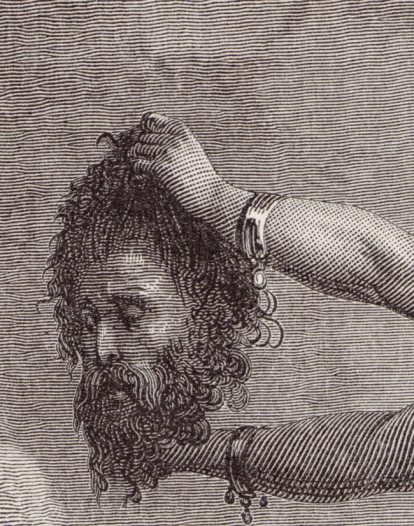
Fig.6. Gustave Doré, Judas Showing the head of Holofernes (1880)
The artist engraved his illustrations into the wood which would then be printed onto paper. I assume he worked at a large scale due to the tiny and intricate details, (I mean just look at all the tiny dots and lines withing figure 6!) but this may be due to the way I know artists work today, as they will work at a larger scale to get all the details then they will reprint at a smaller size and the details are a lot finer. This method may not have been doable at those times, so if I imagine that his plates would have been printed directly into books, then he would have been working at a smaller scale than I would ever have imagined and it’s unbelievable. I could be wrong as I am not fully aware of his process, I just have brief knowledge of how the technique is created nowadays, but either way you can’t dispute that his work was very detailed and he definitely knew how to work with light sources as he wasn’t afraid to work with too much black and he was able to add the right amount of light, so that he was able to achieve depth within his work, creating the realism within his illustrations.
My opinion
This would have been a great artist to take inspiration from during my Lion, the Witch and the Wardrobe project, as I was working in monotone, experimenting with different printing methods and using a somewhat similar lining method to build up depth. Like I had mentioned however, I had been working in more of a straight-lined crosshatching style, whereas Doré was working with more curved lines which gave more shape to his design, and helped in making it look more realistic. I do not believe I would have had the time to work as intricate as he had, but by using a more curved line I believe I could have shown more shape in my own work, and it may have helped in making my work look less flat.
I have recently started to work more realistically in my own work, especially with portraits, so in the future, I may try to create a character in his style, but I may do so by working at a larger scale first then scaling down as to achieve the finer details, as I believe my hand would be too unsteady to create as clean of a piece as his.
Bibliography
Adropofart.com. (2019). Gustave Doré: Information, biography and art – see exhibitions and museums where their work is curated | adropofart.com. [online] Available at: http://adropofart.com/Artist/173/gustave-dore [Accessed 16 Jan. 2019].
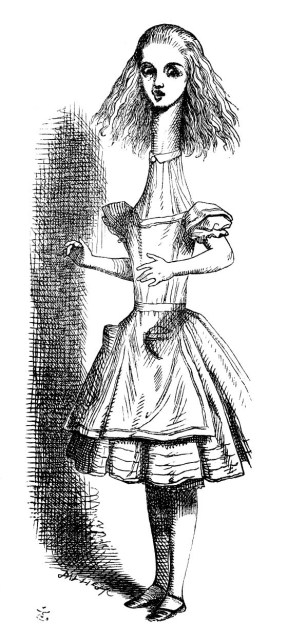
Figure 1 – John Tenniel, Alice’s Adventures in Wonderland, 1865
This is an artist from the Golden Age of Illustration, who I would like to take inspiration from during my Lion, the Witch and the Wardrobe project. He had created the original illustrations for ‘Alice’s Adventures in Wonderland’ by Lewis Carroll.
From the illustrations specifically from this book, Tenniel’s style is semi-realistic but with the theme of the book, he has played around with surrealism, illustrating things that you would not exactly see in the real world, and exaggerating some of the characters proportions, as seen in figure 1.
I believe these illustrations were hand-drawn with pen and ink, but I believe when it came to mass production, the design was etched into a plate, so the illustration could be printed multiple times for hundreds of books.
Because of this factor, during my Lion, the Witch and the Wardrobe project, I want to experiment with different mediums, working traditionally with pen and ink, but also playing around with different printing techniques, such as screen printing, linocut printing, etching, and even creating a plate with the laser cutter that is available within the college.
Primarily, I do want to work in black and white for this project, however, I do plan to also play around with foils, possibly adding hints of gold or silver to the designs, potentially giving my pieces a more regal appearance that I believe will fit the theme of the story.
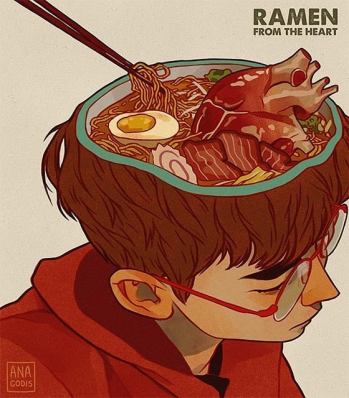
As the competitions are not yet known and I do not know what I will be creating, I want to keep an open mind of where I can go with these projects in sense of style and techniques I could use. I have however been enjoying the work of Ana Godis over the holidays, so would potentially like to use her work as inspiration for a project over the coming year.
I would explain her work as experimental in a way, although I believe she always works digitally, I’d say her style can differ from piece to piece, as for one, she could be creating a beautiful digital portrait which is very realistic, but in another piece, she could be working very stylised, almost ‘cartoony’? But in another piece, she could be combining the two styles, which probably sounds confusing, but she is able to execute the style so well!
Over the holiday, as she does post process videos along with her pieces,I have tried to learn from these videos, trying to follow her steps, as to improve my own technique, and I had created two digital paintings. I could still do with some further practice, however, I do feel the process had given me smoother results, in comparison to the digital painting I had done the year previously.
My own work – Fan art of Mathilda from Leon: The Professional
My own work – Fan art of Jack Torrance from The Shining
I feel as her style is so flexible, if I were to take inspiration from her work, I would be able to apply it to any project, including the competitions. Her work is illustrative but quite contemporary in style, so if I were to learn more from her techniques, I could potentially apply them to book illustrations or editorial themes or possibly even use them for advertising.
Ana Godis does have a Patreon in which I believe she does go into more depth with her process, the tools she uses etc. I personally am not subscribed as I do not use Patreon (as I feel it would be a black hole for me, following too many artists and probably spending all of my student loan within it, which is not something I am committed to doing as of yet) But, if you are interested in her work and do wish to learn more in-depth about her process and tools, here is her link: www.patreon.com/ana_godis
Like Ana Godis, I will potentially be taking inspiration from Rafael Mayani during my commercial projects.
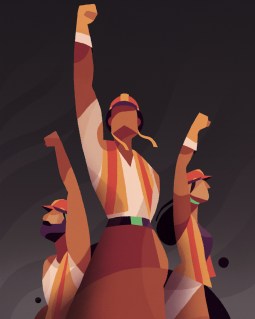
In comparison to the previous artist, I believe his work is more contemporary, possibly more editorial-based, so I believe he would be most useful within the Association of Illustrators – World Illustration Awards competition, especially if I decide to work in the editorial category.
His style is minimal, easily readable and overall it is easy on the eyes. I believe I would most likely see his work in commercial settings, such as in magazines, in advertising, on posters, etc. In figure 3 specifically, he had created an illustration for a magazine, which was honouring the people who helped clean up and take care of others after the earthquake in Mexico in 2017. I believe by not giving his characters faces, it is not singling out any particular person who had helped but instead is celebrating the community as a whole, and the reader could potentially fill in the spaces themselves, imagining the people they know, if that makes sense?
When taking inspiration from his work, it will be with the minimal almost papercut style, as I do believe it is very readable, and it does attract the eye, which I do feel is an important factor if I were to create a piece that would advertise a specific article.
List of Illustrations
Figure 1 – Tenniel, J. (1865) Alice’s Adventures in Wonderland [Online] Available at: https://medium.com/alice-s-adventures-in-wonderland/sir-john-tenniel-s-classic-illustrations-of-alice-in-wonderland-2c3bbdca3a77 [Accessed on 24 Sep. 2018]
Figure 2 – Godis, A (04 Sep. 2018) [Online] Available from: https://www.instagram.com/p/BnTw8cOnCra/ [Accessed on 24 Sep. 2018]
Figure 3 – Mayani, R (13 Nov. 2018) [Online] Available from: https://www.instagram.com/p/BbceF5PFQLR/?taken-by=rmayani [Accessed on 24 Sep. 2018]
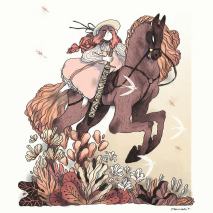
She is an illustrator who I would like to potentially take inspiration from when creating work for my ‘Wizard of Oz themed project. As her work is very textural in style, (as I believe she uses pencil for tonal work, then scans the design in and colours it digitally) I felt if I were to create work in a similar method, I would be able to create work that may appeal more to a younger audience, as they could potentially recognise the textures as mediums they use too.
Figure 1 – Tina Nass, 2017
Another reason that I had chosen this artist, is again, because of the methods and techniques she uses. As I have been playing around with traditional and digital skills in my own illustrations over the holidays, and I have been enjoying the process of doing so, but have felt that my designs have been on the more ‘sketchy’ side, not being up to my usual standard of quality (even though I do love the outcomes), I wanted to take inspiration and learn from Tina Nass’s particular process, to potentially help in creating more refined designs whilst using these techniques.
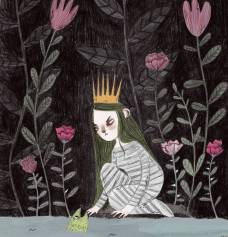
Like Tina Nass, I believe Nuria Tamarit works in a similar process, creating all of her linework and textural qualities by hand, then colouring the designs digitally. I will be using her work as well as Nass’s for inspiration during my ‘Wizard of Oz’ project, however, I will be taking more inspiration from her characters rather than her textures or methods.
Figure 2 – Nuria Tamarit, 2017
Her characters will typically have a cartoon aesthetic, with exaggerated anatomy, especially in the limbs. From looking at some of her pieces, I would say that she creates a lot of Amazonian type of figures, as they are lengthier in the leg, and thicker proportioned.
When taking inspiration from her work, I will be playing around with my own characters proportions and anatomy, seeing which areas that I can potentially exaggerate as to possibly give the characters more personality, for instance, when creating the cowardly lion, I could give him more of a barreled chest, as he is supposed to be a fighter, and I feel this element would help to suggest that quality.
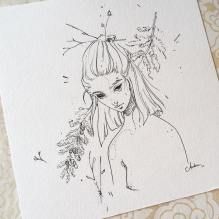
Audra Auclair is one of my favourite artists, I have mentioned her countless of times in previous projects throughout this course, the art and design course beforehand, and I may have even mentioned her within my secondary school projects. I am in love with her work and proudly own 3 of her prints and the book ‘fragments’ that she had made.
Figure 3 – Audra Auclair, 2017
My reason for mentioning her yet again within this course is because I wanted to take inspiration from her inked illustrations, (especially from figure 3 to the left) for my own inktober designs. As I will be creating flower people/pixie type characters, I would like them to be quite delicate and soft in style, so I will try to take inspiration from this specific piece of work, creating my own characters with similar line weights, as I feel the use of fine liners within this piece, has possibly made it even more delicate, as it is less heavy than a brush-tip pen, which she has also used in the past.
Bibliography
A. Auclair. (2018) Instagram [Online] Available at: https://www.instagram.com/audraauclair/ [Accessed on 24 Sep. 2018]





 Melon.R