Draw This in Your Style Challenge.

The project:

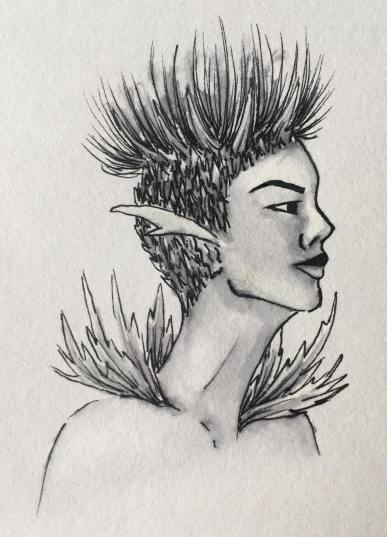
This was a mini side project which I may not have exactly had the time for but had wanted to take part in, which was a challenge on social media where an artist would post their own work using the hashtag DrawThisInYourStyle and their followers would redraw the artists work in their own style and prefered methods/techniques. There were plenty of illustrators who were posting their work around this time, but the one that had caught my eye the most was a character by Chelsea Gracei.

This piece had felt within the realm of my own work, as I do enjoy creating female portraits, especially from the shoulders up, as you may have seen throughout my inktober posts, but it still felt enough of a challenge that it would push me slightly out of my comfort zone, creating imagery that I may not have thought to before and figuring out how to translate Gracei’s character into my own ‘style’.

For the first part of this process, I had followed the steps I had used to create my inktober flower girls, which I had written up in a blog post so you can read all about it by clicking here.

Once I had the traditional elements done, I took a photo of the piece and started to colour the character and her background digitally using a watercolour textured brush. I tried to work straight from the colour palette of the original piece, but I had made my own tweaks here and there to make it my own, as I did want more contrast or more vibrancy within my own palette. With the swords and clouds, I had drawn these elements with a fine liner and in my design, I had played around with some of the overlay options and had set them so that it would look as if the imagery had been cut out of the blue background, so the white would be a stark contrast against the deeper blues. As a final touch, I had tried to blend both the traditional textures and the digital colouring together more seamlessly by applying a noise filter.

drawthisinyourstyle3.jpg

Strengths 

Although this project was a detour from the projects I should have been working on, I do feel it was a quick project as I was able to create this piece within a day and posted it only 2 days after the artist had posted the original design.

When comparing my work to the original illustration, I do feel I have met the challenge, recreating the artist’s character in my own style, even though I hadn’t thought that I really had a style,  and I feel I have taken the themes, imagery and colour palette and have made the piece my own, standing apart from the other submissions. There were a lot of other amazing entries to this artists challenge, but I feel my style and version of the character does stand out well among the others.

Through this project, I was able to experiment more mixing traditional and digital techniques as I have enjoyed doing in the past, but with this illustration, I feel I was able to achieve a higher standard than I have with previous work, so I do believe it shows that I am learning and developing my skills so that I will be able to work with these techniques more often in the future, working more and more to an industry standard.

Weaknesses 

The illustration is a bit rough in some areas, but I believe this is more in the transition from traditional mediums to digital colouring, for instance, the linework may seem more patchy in colour, especially where I have tried to clean up the edges but may have gone in a bit too far revealing the tone of the original linework. the white areas that I have cut out are also not as smooth as I would have liked, but saying this, if they were smooth it may have made the design look more static, as when looking at the design as a whole, I do feel the rougher and more traditional outline is more cohesive with the traditional textures and digital brushes that I had used.

Opportunities

As this project is based on social media, I am putting my work out there which will potentially help in the growth of my audience. As I have used the artists specific hashtag for this challenge and have also tagged her in my work, if she sees and likes my interpretation, she could possibly look through my other posts and maybe end up following me, but that might be a little too high of my hopes. What may be more achievable, however, is that I know she has been sharing other entries for her challenge on her Instagram stories, so she could post my version of her work on there, showing it to her own audience who may like my version of the original piece and like it or potentially follow me from it.

Threats

I don’t really know if this is a threat or not, but I had not really had much input in the content of this illustration as all of the elements were already given to me, I just had to redraw them in my style. So someone could argue that I did not show a lot of creativity within this piece, as I had not put so much thought into it, but I do believe I have managed to put enough of myself into the artwork that I have made the illustration my own, so hopefully no one would need to argue this matter. I do think the original piece was beautiful though, as why I had chosen to redraw it, so I was happy to work with the imagery she had already created and apply my own style to it.


Future Goals and Targets. 

Now that I know I can work to a higher quality when mixing both traditional and digital techniques, I would like to do so more often in the future, potentially in upcoming projects, as I do enjoy the process a lot and I love the textures that I am able to achieve with it.

If this challenge becomes popular again and another artist that I follow post a #DrawThisInYourStyle challenge of their own, I would like to take part in it again, but I would possibly like to take on more of a challenging piece, moving more out of my comfort zones and seeing what I can create maybe with subjects that I am less confident with.


Reading List

Russell, M. (2018). 8 Tools I use For Inktober. [Blog] MelonRIllustration. Available at: https://melonrillustration.art.blog/2018/10/25/8-tools-i-use-for-inktober/ [Accessed 28 Jan. 2019].

List of Figures

Gracei, C. (2019). Instagram. [image] Available at: https://www.instagram.com/p/BtEVIEjBNKy/ [Accessed 28 Jan. 2019].

All other images are my own unless stated otherwise.
Design Philosophies

Thumbnails/Rough Sketching

  • I will always start my projects with quick initial sketches. I feel it is a good way to get initial ideas out on the page quick, then look back and start to develop the ideas from the starting point.


Research and Referencing

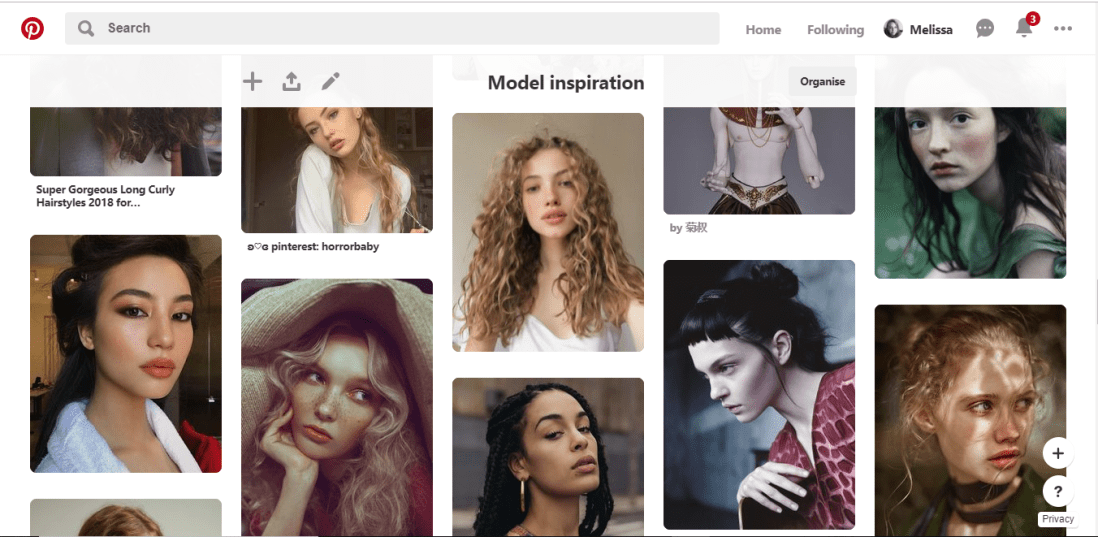
  • I mostly use Pinterest for inspiration, whether it is from illustrations, a colour palette, images of scenery or people.
  • If I need to find a specific pose/face to draw a person and you can’t/are too shy to ask someone to pose for you, Pinterest has a good source of imagery, I have seen a lot of dynamic poses for particular characters, but I mostly use it for reference images of people, you can check out my board by clicking here.


Including myself in my work

  • Enjoying what I do – if I am not enjoying the work I create, if I don’t feel enthusiastic about it, I do try to change elements so that I do like it, but if I have lost hope in a piece then I do not believe it is a good representation of myself.
  • If I do not feel at least 80% positive about a piece, with college work excluded, I do not show the work anywhere else. It may not necessarily be bad, but if I have no confidence to sell it then I believe I will constantly overthink the design and it will get worse and worse in my mind as I pick it apart more and more.
  • I would have said 100% but I don’t feel anyone is ever 100% confident about their work, there is always something they see that they think they could have improved on or changed, that no one else may be able to see.


Thinking outside of the box

  • Being able to work with a brief and/or client, giving them alternative options for the designs, possibly one that is more direct to the brief, one that is more biased to my own likes, and one that would be in between the two.
  • I always try to think outside of the box so that I am creating unique concepts, that can still link back to the brief, that would separate me from other illustrators/designers.


Problem-solving

  • Knowing my own weaknesses and figuring out ways to work around them, when I don’t have time to improve them on the spot.
  • Taking the time to learn from my weaknesses to create better work in future, potentially having fewer problems to solve.


Challenging myself

  • Whether it is with new techniques, mediums or programs I have not used before, or specific imagery that I am not used to drawing a lot, for instance, backgrounds or character work.


Final Checks

High standards

  • During college times, I feel I do hold my work to a higher standard than when I am working on personal projects at home, however, this is something that I am looking to change, so that I hold up all of my work to that high standard.
  • In the past I have had an ‘it’ll do’ mindset towards my personal work, especially when it has taken so long to create. Instead of taking a break and coming back to it later as to work on it further, I usually just say “its fine”, but I’m determined for this to end this year. When I am feeling the “it’ll do” moments now, I am going to take a break from the specific piece and just come back to it later; this will hopefully give me a fresh mindset and more energy when I come back to the piece.


Is the piece a good representation of myself?

  • Relating back to a previous point, if I am not confident behind a piece I don’t want it to be a representation of myself. Following the high standards point, if I have an “it’ll do” mindset to a piece then I should not be posting it as I know I can make improvements once I’ve taken a break and come back to it with fresh eyes. If I send out a ‘meh’ piece just for the sake of it, then ‘meh’ will be the response in return.


Does it communicate a specific message and does it communicate it effectively?

  • If I create a piece with a purpose to communicate a specific message then I have to be sure that it can be read and that the point will not be overlooked.

8 Tools I Use For Inktober

1.Pinterest

Pinterest has been my main source of inspiration throughout this project so far and during many previous projects. Over time I have built a collection of ‘Model Inspiration’ which include photos of different faces shapes, hairstyles different ethnicities and so on. I constantly refer to this board for inspiration, and if you were to look in it, you would most likely see the faces I have used as inspiration/reference during this challenge.

pinterest


2.Sketchbook

Throughout the challenge, I have been sketching each design out within my sketchbook, this allows me to make any changes necessary before I start inking the design.


3.A4 Light Pad

Once I am happy with the sketch, I rip out a page from the back of the book to create the inked design on, (yes my sketchbook is probably going to be very thin by the end of the challenge), then using an A4 light tray, which I had purchased from Amazon, and plugs into your computer or laptop with a USB, I start lining the sketch.


4.Derwent pens

For the inking process, I use Derwent Graphik Line Maker Drawing Pens, which are a pack of 6, varying from 0.05mm, to 0.8mm. I often use 0.1mm for the facial features, 0.2 for face or petal outlines, 0.05 for very fine details, sometimes even cross-hatched shading, and for flat black areas, I use 0.3 or 0.8.


5.Water + Paint brush

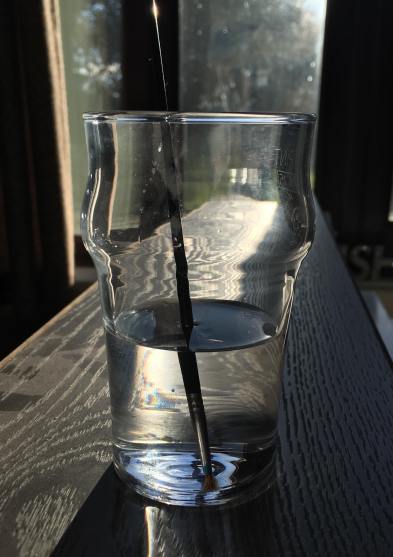
To add more shading with a softer blend, to the linework, I dip a thin paintbrush into a glass of water and bleed, drag and blend out some of the inked line work. If I feel it is bleeding too much or is too wet, I have often blotted it down with my sleeve or a piece of tissue.

44972115_2279412198755543_3778573181749559296_n


6.White pen

In some area, possibly where I have lost any highlights or the ink may have bled too much, once the piece is dry, I use a white ink pen and start adding back in the highlights or cleaning up some of the areas that may have come out too dark. If the white pen has gone slightly over some of the linework, I then just go back over with one of the fine liners.

45179285_292486278141594_8399343043123085312_n


7.Phone camera

Once the piece is complete, I take the design to a place which has good natural lighting, then take a picture of the piece using my iPhone camera. I do feel the lighting is an important factor, as you want to take the best photo you can of your design, and if taken too late on in the day, it can make your piece look more cool toned, or if you are using the lights within your house, I don’t know about yours, but mine are very orange/yellow, so would make my designs look too warm toned.


8.Whitagram for editing

With the photo, I then crop the design, making the illustration the only part visible, removing any background or any white, unused space from the page. I then take the photo into an app called Whitagram, which I originally solely used as to make my images square, for the way in which Instagram is set out, but for this project, I have also been using the editing tools within the app, playing with the lighting, exposure and shadows, as to make my pieces as white as possible.

This step would be much easier if I had scanned in the designs and edited them within Photoshop instead, however, I do not have a scanner at home, and as this was a daily challenge, I would not have been able to take advantage of the colleges each day of the week. So for the time being, I just have to make do with the resources I do have.

When it comes to creating my zine, however, I will be doing this step properly, by scanning in all of my designs and editing them with photoshop. I believe it will give me better results especially with quality, which I feel is very important for the product I will be producing, as I do want any potential buyers of the zine, to get their money worth.